When a warehouse runs short of pallet space, the first answer is usually high-density racking. These systems store pallets several deep instead of one deep. They cut down on aisles and fit far more pallets into the same floor area.
The three most common options are drive-in, push-back and pallet live racking. Each one packs pallets in tightly. Each one also handles stock in a different way.
Picking the wrong system can cause real problems. Pallets get trapped behind other stock. Lanes sit half empty. Date-sensitive goods go out of order.
In this guide, we compare drive-in racking vs push-back racking, and explain where pallet live fits in. We focus on the three things that usually decide the right choice: stock rotation, SKU count and forklift type.
At Unirack, we supply and install a full range of pallet racking, including all three high-density systems covered here.
FIFO and LIFO: The Difference That Matters Most
Before comparing the systems, it helps to understand stock rotation.
FIFO means first in, first out. The first pallet you put away is the first one you take out. This matters for anything with a use-by date, a batch code or a shelf life.
LIFO means last in, first out. The most recent pallet you put away is the first one you take out. Older pallets sit behind it until the lane is cleared.
LIFO works well for stock that doesn’t expire. Building materials, packaging and many manufactured goods are good examples.
This is the first question to answer. Drive-in and push-back racking are normally LIFO systems. Pallet live racking is a FIFO system. If your stock has to rotate strictly by date, that narrows your choice straight away.
Drive-In Racking
How Drive-In Racking Works
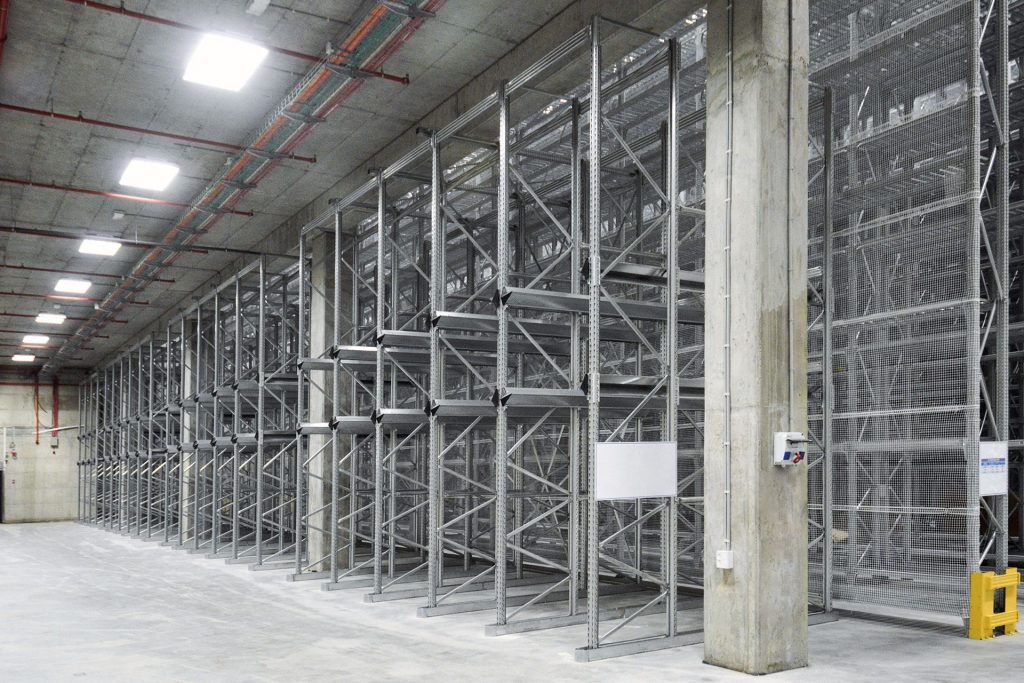
Drive-in racking has no beams across the front. Instead, pallets sit on rails that run along each side of a lane.
The forklift drives into the lane to place or collect pallets. The lane fills from the back to the front. Pallets come out from the front, so the last pallet in is the first pallet out.
A variation called drive-through racking is open at both ends. Pallets go in from one side and come out from the other. This turns it into a FIFO system, but it needs an aisle at each end.
Where Drive-In Racking Works Best
Drive-in racking gives the highest density of the three systems. Lanes can run many pallets deep, and very little space is lost to aisles.
It suits large quantities of the same product. Each lane should hold one SKU only. Mixing products in a lane means moving pallets to reach the one you need.
Typical uses include cold stores, seasonal stock and bulk raw materials.
The Trade-Offs
Drive-in racking is the slowest of the three to work with. Forklift drivers have to enter the racking, place the pallet carefully and reverse out.
Driving inside the structure also raises the risk of impact damage. Careful, well-trained drivers matter more here than with any other system.
Pallet quality matters too. Damaged or undersized pallets can drop between the rails.
Push-Back Racking
How Push-Back Racking Works
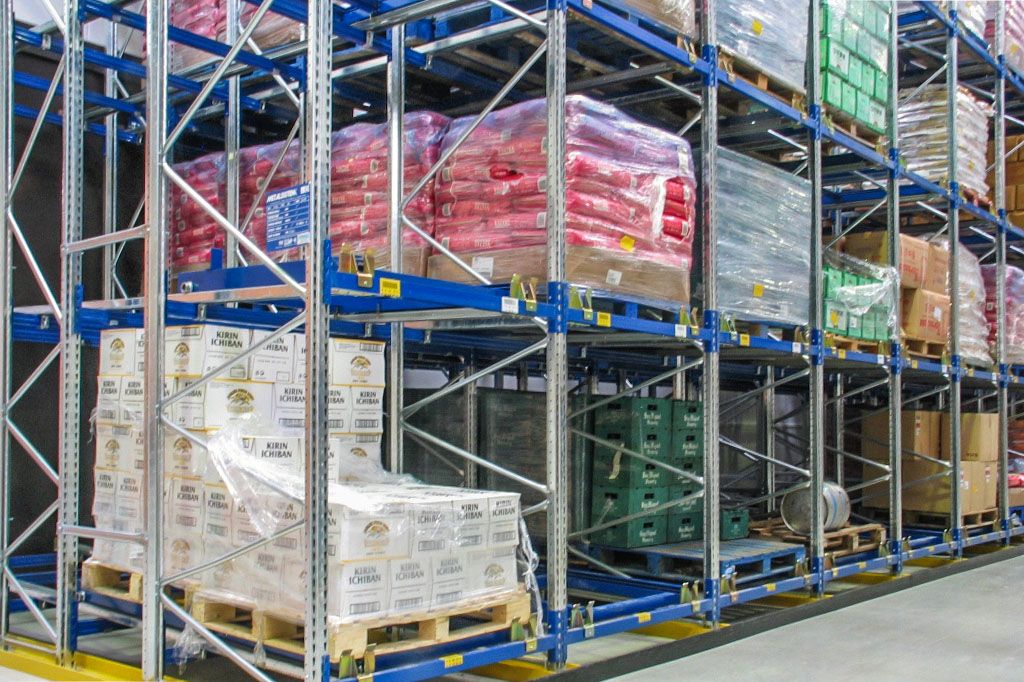
Push-back racking stores pallets on nested carts that run on slightly sloped rails.
The forklift places the first pallet on the top cart. When the next pallet goes in, the driver uses it to push the first one back. When a pallet is removed, the one behind rolls forward to the front.
All loading and unloading happens from the aisle. Forklifts never enter the racking.
Where Push-Back Racking Works Best
Push-back racking usually holds two to five pallets deep per lane. That gives good density without lanes that are too deep to manage.
Each level of each bay is its own lane. This means you can store a different SKU on every level. For warehouses with a moderate number of products, this is a big advantage over drive-in.
Push-back is also faster to work with than drive-in. Pallets always come to the front, so drivers don’t need to go looking for them.
The Trade-Offs
Push-back is still a LIFO system. It isn’t suitable for stock that must rotate strictly by date.
It usually costs more per pallet position than drive-in, because of the carts and rails. Lane depth is also more limited.
Pallet Live Racking
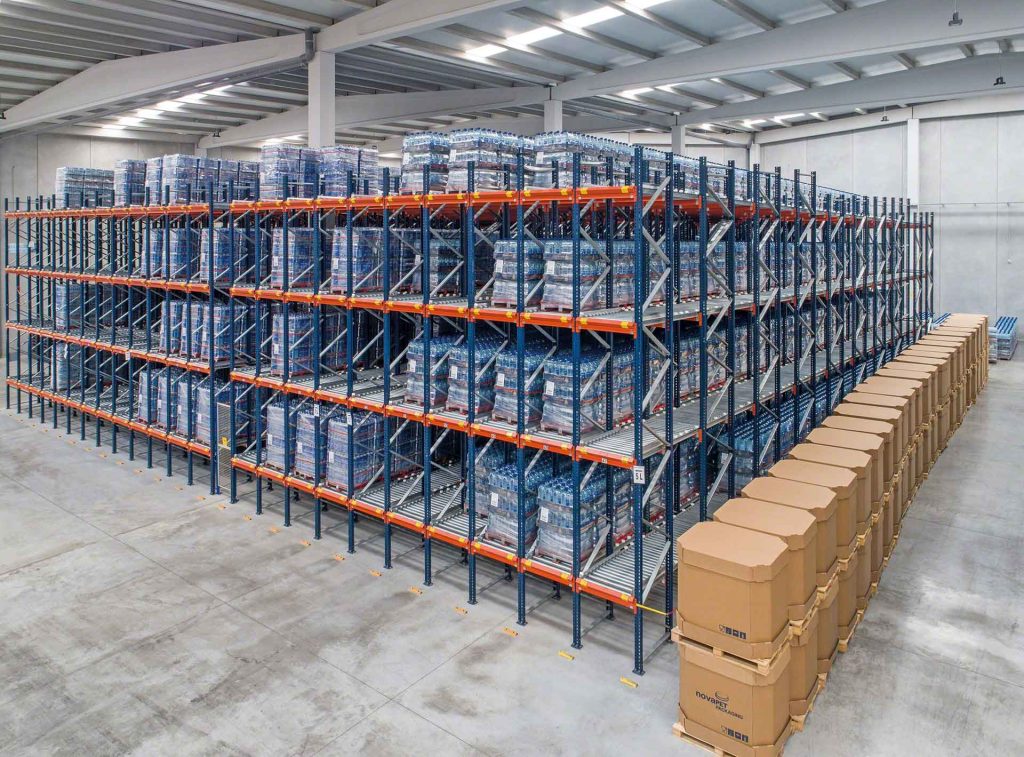
How Pallet Live Racking Works
Pallet live racking is also called gravity flow racking. It uses sloped roller tracks inside the racking.
Pallets are loaded at the back, at the higher end. They roll forward under gravity to the picking face at the front. Speed controllers and brakes keep the movement steady and safe.
The first pallet loaded is always the first pallet to reach the front. That makes pallet live a true FIFO system.
Where Pallet Live Racking Works Best
Pallet live racking suits stock where rotation really matters. Food and drink, pharmaceuticals and date-coded goods are common examples.
It also suits high-throughput operations. Loading and picking happen in separate aisles, so the two tasks don’t get in each other’s way.
The Trade-Offs
Pallet live is usually the most expensive of the three systems per pallet position. The roller tracks and braking systems add cost.
It needs two aisles, one for loading and one for picking. It also needs good-quality, consistent pallets that roll smoothly.
How to Choose Between Them
There is no single best system. The right choice depends on how your stock behaves. These are the questions we ask first.
Does Your Stock Need Strict Rotation?
If you handle date-coded or perishable goods, you need FIFO. That points to pallet live racking, or drive-through racking if you have space for aisles at both ends.
If your stock doesn’t expire, LIFO is fine. That opens up drive-in and push-back.
How Many SKUs Do You Store?
This is often the deciding factor between drive-in and push-back.
Drive-in works best with a small number of SKUs and many pallets of each. A deep lane only stays efficient if you can fill it with one product.
Push-back works better when you have more SKUs and fewer pallets of each. Shorter lanes and separate levels give you more pick faces.
A common mistake is putting too many SKUs into drive-in racking. Lanes end up part-full, and space is wasted. This is often called honeycombing.
What Forklifts Do You Use?
Drive-in racking needs trucks that fit safely inside the lanes. Lane width and mast height have to match your fleet.
Push-back and pallet live are loaded from the aisle. They generally work with standard counterbalance or reach trucks.
If you plan to change your forklift fleet, factor that in before you choose.
How Fast Does Stock Move?
Slow-moving bulk stock suits drive-in.
Medium-turnover stock with a range of products suits push-back.
Fast-moving stock that must rotate in order suits pallet live.
Can You Mix Systems?
Many warehouses use more than one type of racking. High-density systems handle bulk stock. Standard selective racking handles products that need fast, direct access.
Hand-picked items often sit on shelving nearby. Our Unirack shelving system is designed for hand-loaded stock, spares and smaller goods. It isn’t pallet racking, but it works alongside our pallet racking range because both come from the same manufacturer.
If you’re planning a wider layout, our warehouse shelving page shows how shelving and racking can share the same space.
Safety and Inspection
All pallet racking needs regular checks. This matters even more for high-density systems, where pallets and forklifts work in tighter spaces.
Drive-in racking takes the most knocks, because trucks operate inside it. Push-back carts and pallet live rollers also need checking to make sure they run smoothly.
Staff should report any damage straight away. A competent person should also carry out a full racking inspection at least once a year.
Get Advice on High-Density Pallet Racking
Choosing between drive-in, push-back and pallet live racking comes down to your stock, your SKUs and your forklifts. A short conversation about how your warehouse runs usually makes the right answer clear.
We offer free CAD layout designs. We can supply your racking only, or design, supply and install the full system anywhere in the UK.
Take a look at our pallet racking range, see examples of our work, or download the Unirack brochure. When you’re ready, request a free quote or call us on 0115 939 7572.