
Buying warehouse shelving looks simple until you start comparing options. Suddenly you are weighing up boltless against modular, per shelf load against bay load, standard bays against long span, and a dozen height and depth combinations, all while a sales sheet promises that every one of them is the answer. Choose well and you get a system that pays for itself in reclaimed space and faster picking for years. Choose badly and you end up either paying for capacity you never use or, worse, outgrowing the shelving within a year and starting again.
The good news is that knowing how to choose warehouse shelving comes down to a handful of decisions, taken in the right order. This guide walks through those decisions the way an experienced installer would, so you can specify a system with confidence rather than guesswork. If you already know exactly what you need and just want it designed and fitted, our warehouse shelving page covers the supply and installation side. If you are still working it out, read on.
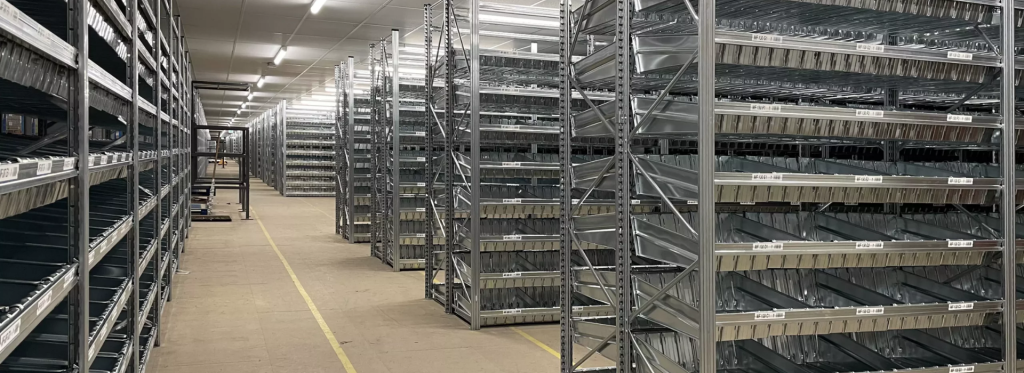
Start with what you are storing, not the shelving
The most common mistake is to shop for shelving before understanding the load. It is the wrong way round. The shelving should be chosen to fit your goods, not your goods squeezed into whatever shelving looked like a good deal.
Before you look at a single product, take an honest inventory of what will actually sit on the racks. How heavy are the individual items, and how heavy is a full shelf once it is loaded. How big and what shape are they, because long, awkward or oversized items rule out standard bays. How often do you pick each item, since fast movers need to be easy to reach and slow movers can go higher or deeper. And how much of it do you hold at peak, not on a quiet Tuesday. Getting these numbers down on paper turns a vague hunt into a clear specification, and it is the single most useful thing you can do before spending anything.
It is also worth thinking a year or two ahead. Stock profiles change, ranges grow, and a warehouse that is comfortable today can be cramped after one good sales quarter. Building a little headroom into your plan now is far cheaper than retrofitting later.
The main types of warehouse shelving, and what each is good for
Once you know what you are storing, the type of shelving tends to select itself. There are a few broad families, and each earns its place in different situations.
Light duty boltless or rivet shelving is the entry level option. It is quick to assemble, inexpensive, and fine for small parts, box files, cartons and hand loaded stock that is not especially heavy. It is popular in stockrooms and back of house areas where budgets are tight and loads are modest. The limitation is in the name. Push the weight and it starts to struggle.
Modular steel shelving sits in the sweet spot for most warehouses. This is the ground Unirack occupies, a robust, zinc coated steel system that carries far more than light duty racks yet is more flexible and better value than heavy pallet racking for hand loaded goods. It suits everything from automotive parts and industrial components to retail back of house and pharmaceutical storage, and because it is modular you can configure and reconfigure it as needs change. If you want to see how the system itself is built, the Unirack shelving page sets out the range.
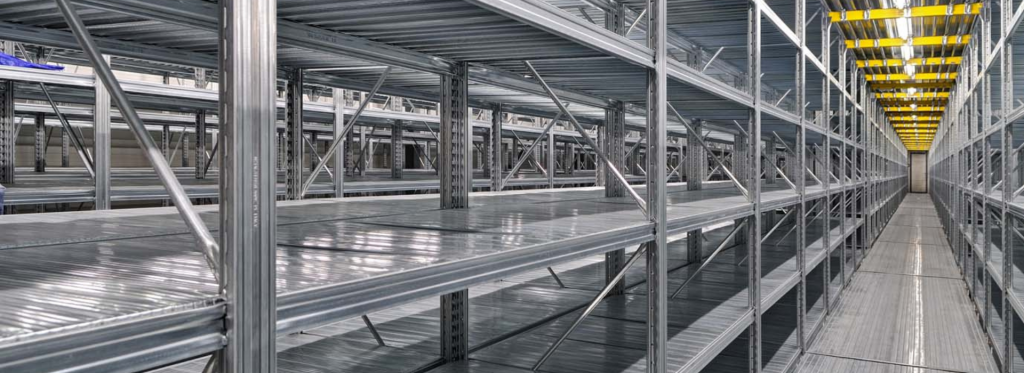
Long span or wide span shelving is the answer when items are bulky or awkward rather than simply heavy. Longer beams and deeper shelves handle large cartons, tyres, drums and oddly shaped goods that will not sit neatly on a standard bay. It bridges the gap between shelving and racking for anything that needs a bit more room per level.
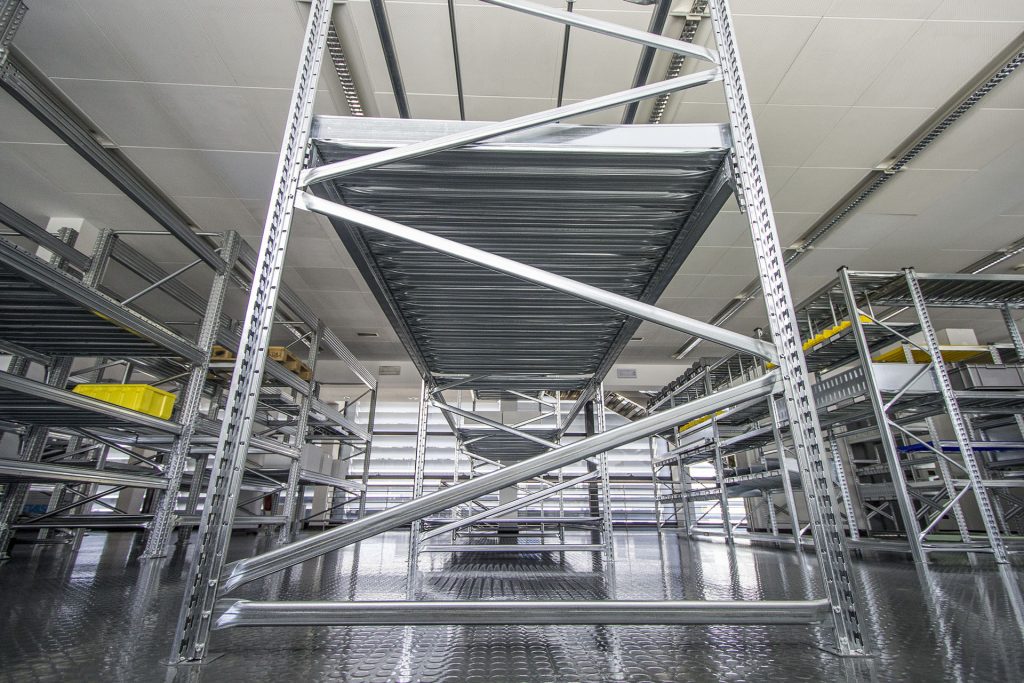
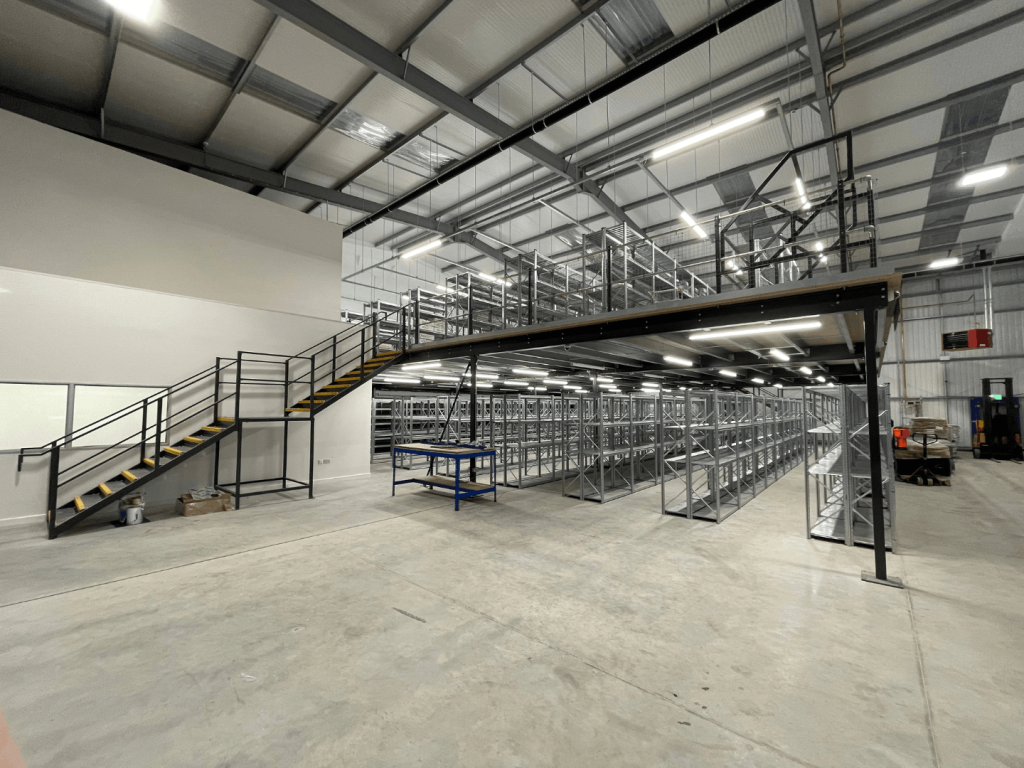
Multi tier and mezzanine shelving is how you buy floor space you do not have. By stacking shelving into two or three linked tiers with walkways, or building a mezzanine over the top, you use the vertical volume of the building instead of just its footprint. This is often the most cost effective way to expand storage without moving to a bigger unit. Two tier systems in particular are a Unirack speciality, and we have written separately about the benefits of two tier shelving if that route interests you.
Mobile shelving takes high density a step further by mounting bays on tracks so they close together and open only when needed, eliminating the wasted aisles of static shelving. It is ideal where space is at an absolute premium and access to any given aisle is occasional rather than constant, which is why it turns up so often in retail back of house and archive storage. Our mobile shelving page explains how it works in practice.

Then there is pallet racking, which is a different animal aimed at palletised loads handled by forklift rather than hand picked stock. Plenty of warehouses need both, working side by side, and deciding where the line falls between them is a question in its own right. Rather than repeat it here, our guide to warehouse shelving versus pallet racking walks through exactly when each makes sense.

Match the load, and respect the ratings
Weight is where good intentions go wrong, because it is easy to underestimate how heavy a full shelf becomes. A rack that comfortably holds a few boxes can be badly overloaded once every level is packed, and overloaded shelving is both a safety risk and a false economy.
Two numbers matter. The first is the load per shelf or per level, usually given as a uniformly distributed load, which assumes the weight is spread evenly rather than piled in one spot. The second is the total load per bay, the sum of every level, which the uprights and the floor beneath them have to carry. When you compare products, make sure you are comparing like for like, because a headline figure that sounds generous per bay can be modest once you divide it across several shelves.
The sensible rule is to specify for your heaviest realistic scenario and then leave a margin, rather than buying right up to the limit. It costs a little more at the outset and saves a great deal of worry later. A good supplier will help you translate your stock weights into the right rating rather than leaving you to interpret a spec sheet alone, and reputable systems carry clear load notices so your team knows the limits at a glance.
Think vertically, but plan the access
Height is where a lot of storage gets won or lost. Many warehouses run out of floor long before they run out of ceiling, and shelving that reaches higher can transform capacity in the same footprint. The catch is that height is only useful if you can safely and quickly reach it.
Before you specify tall bays, look at three things. Your building, because usable height is limited by the roofline, by lighting, sprinklers and services, and by the flatness and loading capacity of the floor. Your access method, since hand picking, step access, order pickers and forklifts each need different clearances and aisle widths. And your pick profile, because it makes sense to keep fast moving items in the easy to reach golden zone and send slow movers up high or down low. Deciding how you will get to the top level is not an afterthought, it shapes the whole layout.
This is also where shelving choices start to touch on wider warehouse flow. We keep this guide focused on selecting the shelving itself, but if you want to go deeper into layout, picking routes and throughput, our article on how to improve warehouse efficiency picks up that thread.
Buy a system you can change, not just one that fits today
A warehouse is never finished. Ranges expand, seasons shift the mix, and a layout that suited last year can fight you this year. That is why modularity deserves real weight in your decision, even though it rarely shouts for attention on a quote.
Modular shelving lets you add bays, change beam heights, extend runs and reconfigure aisles as your needs move, all using the same system you already own. It means your first purchase is the start of something you can grow rather than a fixed installation you will eventually rip out. When you compare options, ask how easily each one expands, whether new parts will match what you buy now, and how quickly changes can be made without specialist tools. A system that adapts with you is almost always cheaper over its life than one that looked slightly keener on day one.
Let your sector guide the detail
Different industries lean on shelving in different ways, and recognising your own pattern helps sharpen the specification. Retailers and their back of house operations tend to prize high density and fast replenishment, which is why mobile and multi tier systems are so common in stockrooms behind busy stores. Automotive settings need to hold heavy, awkward parts such as exhausts, tyres and panels, so load and span matter more than sheer shelf count. Industrial and manufacturing sites often mix hand picked components with palletised raw materials, calling for shelving and racking together. Pharmaceutical and healthcare storage adds requirements around cleanliness, traceability and controlled access.
Unirack has fitted systems across all of these settings, from back of house installations for well known retail brands to industrial and trade environments, so the right configuration usually already exists for your sector. The point for your own decision is simply this. Do not specify in the abstract. Anchor every choice to how your industry actually moves stock.
Getting it installed right
The best shelving in the world underperforms if it is badly installed or poorly laid out, and a rushed install can create safety problems that only show up later. Choosing your shelving and choosing how it goes in are really the same decision.
A proper design, supply and fit service starts with your goods and your building, produces a layout that makes the most of the space, and installs it safely and to the correct tolerances. It should include clear load signage, a floor plan that leaves workable aisles, and a system set out so it can be extended cleanly later. This is where working with a specialist rather than a box shifter pays off, because the layout and the install are where theory meets the concrete floor. It is worth downloading the Unirack brochure to see the range and configurations in one place before you commit.

Frequently asked questions
What is the difference between warehouse shelving and pallet racking?
In short, shelving is designed for hand picked goods loaded by people, while pallet racking is built for palletised loads moved by forklift. Many warehouses use both. Our dedicated guide to warehouse shelving versus pallet racking explains where the line falls and how to combine them.
How much weight can warehouse shelving hold?
It depends entirely on the system. Light duty shelving suits modest loads, while modular steel systems carry considerably more, and the figures are given as a load per shelf and a total per bay. The important thing is to specify for your heaviest full shelf and keep a margin, rather than loading right up to the stated maximum.
Can I add to my shelving later?
With a modular system, yes. That is one of its main advantages. You can add bays, adjust levels and extend runs using the same components, which is why buying an expandable system is usually worth it even if you do not need the extra capacity yet.
Do you install the shelving as well as supply it?
Yes. Unirack offers a full design, supply and fit service across the UK, so the layout is planned around your space and goods and the system is installed safely and correctly rather than left to you to assemble.
Ready to specify the right system?
Choosing warehouse shelving is really a series of small, sensible decisions. Start with what you store, match the load and the height to it, plan how you will reach everything, and pick a modular system you can grow into rather than out of. Get those right and the shelving stops being a cost and becomes one of the quiet reasons your warehouse runs well.
If you would like a system designed around your own stock and building, the Unirack team can help. Take a look at our warehouse shelving options, download the brochure, or call us on 0115 939 7572 to talk through what you need. We will help you specify a solution that fits today and still fits when you have grown.